 Wisdom from the Vine

If you want to stay focused during uncertainty, start by treating focus as a skill you build on purpose, not a mood you wait for. Name the few things that matter most right now. Cut the noise that competes with them. Then build simple, repeatable habits that protect your attention even when circumstances shift. Uncertainty won't disappear, but your clarity can become steadier than the chaos around you.
This idea sits at the heart of a Crush & Climb episode, How to Stay Focused When Everything is Uncertain (A CEO's 10-Step Guide). In it, host Jason McClain starts from a simple premise: in a world filled with distraction and disruption, the ability to focus is your ultimate competitive advantage. This article explores that premise and offers practical ways to put it to work in your own week.
Focus as a Competitive Advantage
Most people think a competitive advantage is something external: a better product, more capital, a stronger network. Those things matter. But when everything around you is uncertain, the leader who can still think clearly, decide deliberately and act consistently has an edge that's hard to copy.
Jason has seen this play out across a long entrepreneurial career. He has launched over 100 companies and sold more than a dozen. His ventures range from an advertising firm with international offices to a legal tech platform to his winery, McClain Cellars. Running that many ventures means living with uncertainty as a constant companion. You learn quickly that you can't control every variable. What you can control is where you put your attention.
Focus is an advantage because it compounds. A clear mind makes better decisions. Better decisions create fewer messes to clean up. Fewer messes free up more attention for the work that moves you forward. Distraction compounds too, just in the opposite direction.
Why focus matters more when things are unstable
When conditions are calm, a little distraction is survivable. When conditions are chaotic, every scattered hour costs more. Teams look to leaders for direction during uncertain times. If the leader is reactive, jumping from headline to headline and fire to fire, that energy spreads. If the leader is focused, that calm spreads too.
Why Chaos and Distraction Erode Clarity
Uncertainty doesn't just make the future harder to predict. It quietly pulls on your attention in several ways at once.
- Constant input: When things feel unstable, it's tempting to check news, messages and updates over and over, hoping for reassurance. Each check fragments your attention.
- Fear-driven reactions: Uncertainty triggers worry, and worry tends to push us toward urgent-feeling tasks rather than important ones.
- Too many open loops: Every unresolved question takes up mental space. When everything feels uncertain, the list of open questions grows fast.
- Saying yes to everything: In unstable times, people often take on more to feel secure. The result is a calendar that leaves no room for deep thinking.
Crush & Climb often uses wine as a metaphor for the lesson at hand. The show describes a crisp Sauvignon Blanc as embodying the art of saying "no." That fits here. Much of protecting your clarity comes down to deciding what you won't do, so that what you will do gets your full attention.
The hidden cost of blind spots
Sometimes the thing eroding your focus isn't outside you at all. It's a habit or weakness you haven't noticed. Jason explores this in The Blind Spot That's Costing You Millions, which asks what happens when you don't even know what your Achilles' heel is. If you keep losing focus in the same way, under the same kinds of pressure, it may be worth asking whether a blind spot is part of the pattern.
Highlights from the CEO's 10-Step Guide
The episode is framed as a CEO's 10-step guide to maintaining clarity when everything feels chaotic and uncertain. The best way to get the full framework is to listen to the episode itself. Rather than paraphrase every step here, it's worth looking at the core themes the episode is built around and why they matter.
Treat focus as something you choose
The episode's starting point is that focus is a competitive advantage. That framing shifts the question from "Why can't I concentrate?" to "How am I going to protect my attention today?" It turns focus into an active decision rather than a passive state.
Clarity before action
The central question of the episode is how to maintain clarity when things feel chaotic. That points to a useful principle: get clear first, then move. When you rush into action without clarity, you often end up busy without being productive.
Practical frameworks over vague motivation
Crush & Climb is structured around "The Forge," the part of each episode where raw experience is hammered into practical wisdom. Jason shares unfiltered stories and actionable frameworks designed to help listeners not just bounce back from setbacks, but bounce forward with newfound strength and clarity. A step-by-step guide fits that approach: something you can apply, not just feel inspired by.
Learning from adversity
Jason's own story shapes how he talks about pressure. Born without fingers on his left hand, he developed a unique approach to problem-solving, teaching himself to play the guitar, golf and even fly an airplane. That kind of persistence requires narrowing in on what you can do and working at it deliberately. It's a useful lens for uncertain seasons: focus on the next solvable problem rather than everything you can't control.
Building Focus Habits Into Your Week
Frameworks are only useful if they show up in your calendar. Here are some general, common-sense ways to turn the idea of focus into weekly practice. Adapt them to your own work and life.
- Start the week by naming your priorities. Before the week fills up, write down the few outcomes that would make it a success. Keep the list short. If everything is a priority, nothing is.
- Block time for deep work. Put focused work sessions on your calendar like meetings you can't skip. Protect them from interruptions as much as you reasonably can.
- Limit how often you check for updates. Choose specific times to review messages and news instead of checking constantly. You'll still stay informed without letting every update hijack your attention.
- Practice saying no. Each week, look for at least one request, meeting or commitment you can decline or delegate. Think of it as your Sauvignon Blanc moment.
- Close open loops. Capture unresolved questions in one place. Decide on a next step for each, even if that step is simply "revisit next week." Getting them out of your head frees up mental space.
- Review and adjust. End the week by asking what pulled you off course. Look for patterns. Repeated distractions may point to a blind spot worth addressing.
Create a ritual that signals focus
Crush & Climb describes itself as a weekly ritual, opening each episode with "The Pour," where Jason uncorks a bottle whose character mirrors the day's lesson. Rituals help because they signal a shift in attention. Your focus ritual might be as simple as clearing your desk, closing extra browser tabs and taking a few minutes to review your priorities before diving in. The specific action matters less than doing it consistently.
Be patient with the process
Focus habits take time, much like a good wine takes time to develop. Some weeks will go better than others. The goal isn't perfection. It's a gradual shift toward spending more of your attention on what truly matters, even when the world feels unpredictable.
Keep Climbing
Uncertainty is part of leadership, business and life. You can't remove it, but you can decide how you respond to it. By treating focus as a competitive advantage, noticing what erodes your clarity, learning from frameworks like the CEO's 10-step guide and building simple habits into your week, you give yourself a steadier foundation to climb from.
For more conversations on resilience, leadership and turning adversity into advantage, explore all Crush & Climb episodes. Pour yourself a glass of something you love and press play.
Frequently asked questions
What does it mean to stay focused during uncertainty?
It means keeping your attention on the few priorities that matter most, even when circumstances are changing or unclear. It's less about ignoring uncertainty and more about not letting it scatter your energy.
Where can I hear the full CEO's 10-step guide to staying focused?
The full framework is shared in the Crush & Climb episode How to Stay Focused When Everything is Uncertain (A CEO's 10-Step Guide), hosted by Jason McClain.
Why is focus considered a competitive advantage?
In a world full of distraction and disruption, the ability to think clearly and act deliberately is rare. Leaders who can protect their attention tend to make steadier decisions when others are reacting.
How can I start building focus habits this week?
Begin by naming a short list of weekly priorities, blocking time for focused work and limiting how often you check messages. Review at the end of the week to see what pulled you off track.
About the author
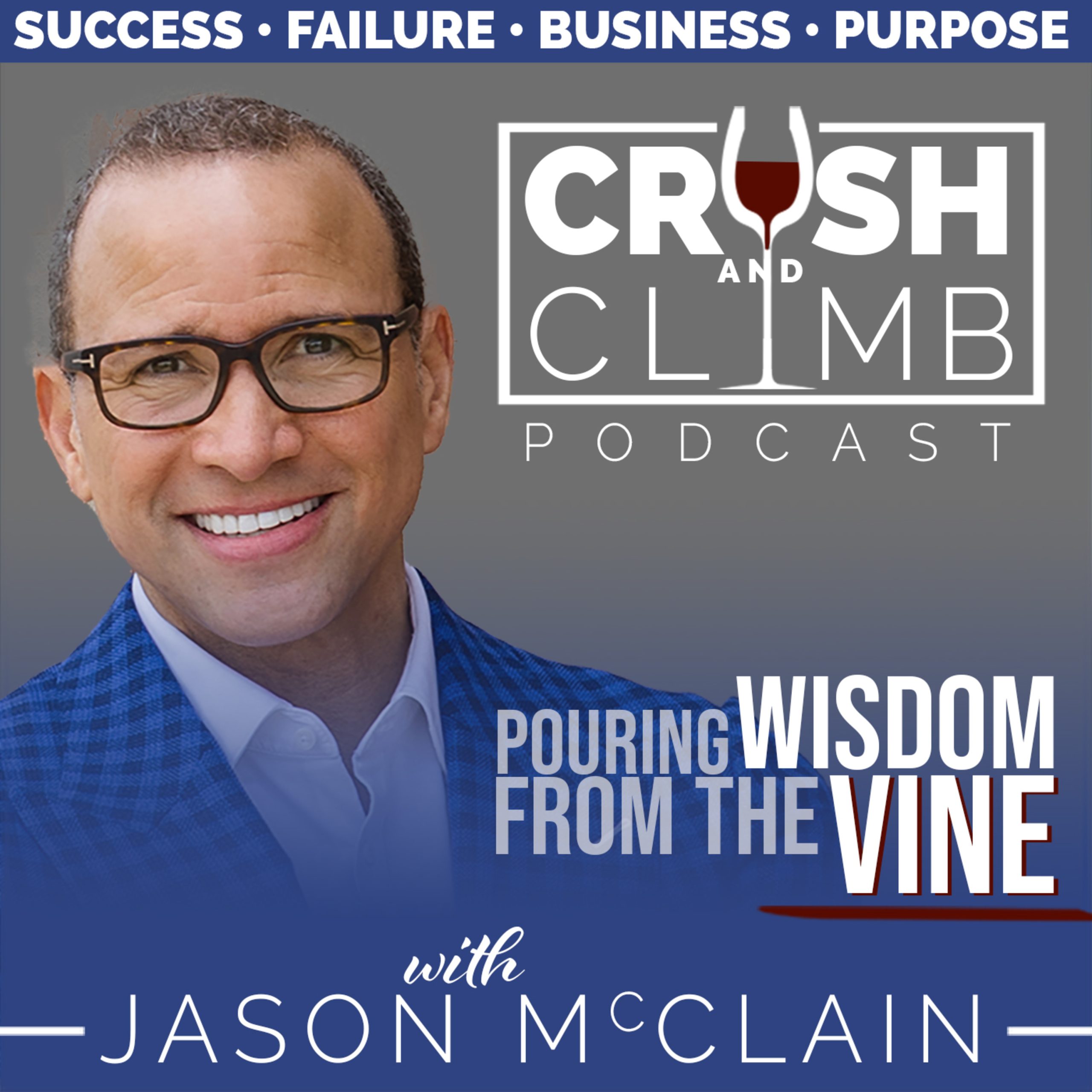
Crush and Climb with Jason McClain
Pour yourself a glass of something you love and join us for Crush & Climb, the podcast that pairs the intricate stories of great wine with the powerful strategies needed to navigate life’s biggest challenges. This isn’t just another business podcast. It’s a weekly ritual for leaders, entrepreneurs,
More about Crush →Keep reading

Imposter Syndrome: Turning Self-Doubt Into a Superpower
Feeling like a fraud is common among leaders who are growing. Here's how to overcome imposter syndrome by reframing self-doubt as a signal of growth and a source of strength.

Is Hustle Hurting Your Business? Health as Your Top KPI
Hustle culture burnout can quietly erode the very business you're working so hard to build. Here's why your health may be the most important metric you track, and how to build a pace you can sustain.

How to Survive Hard Times by Using Fear as Fuel
Hard times are inevitable, but staying stuck in them is a choice. Here is how to reframe fear as energy and use it to move forward in life and business.
Comments (0)